Horst
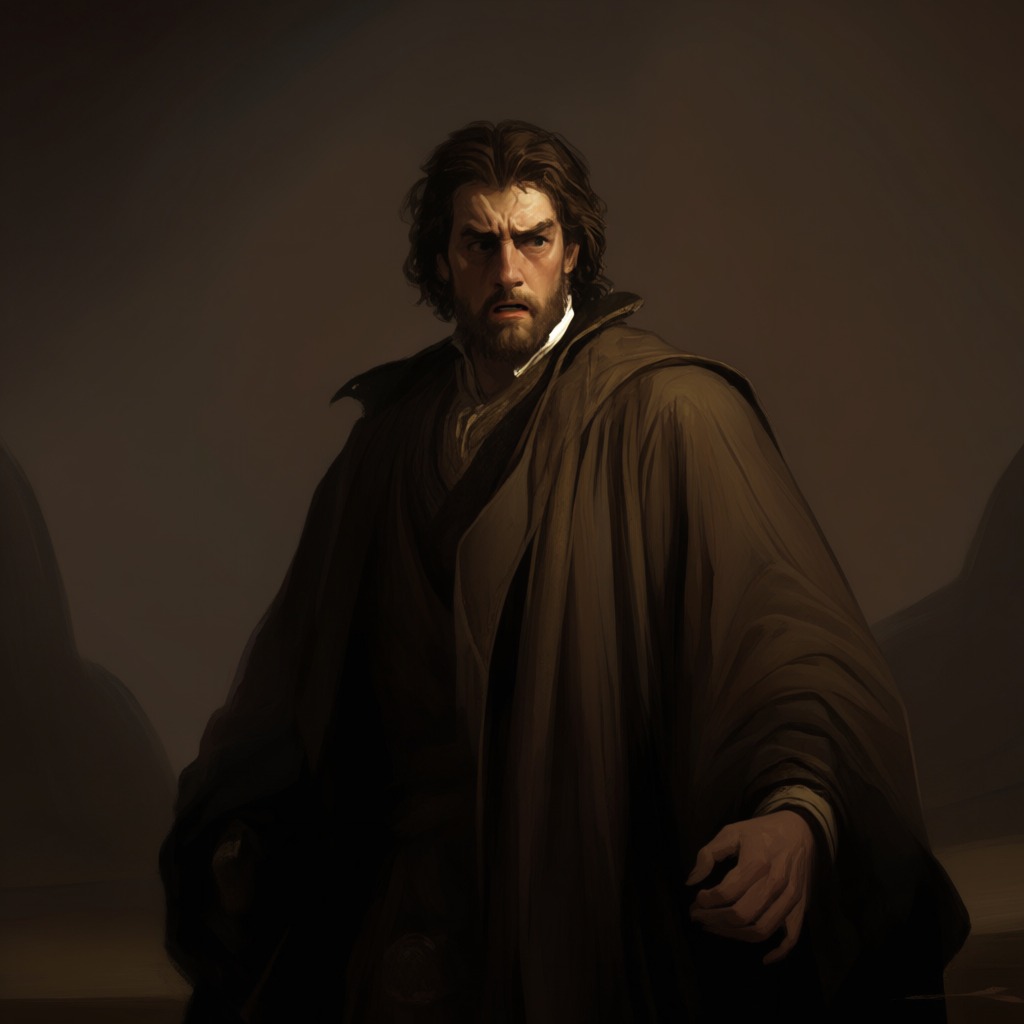
Horst is a German-born art dealer and junkie who operates in the shadowy borderland between high connoisseurship and the black market. He lives in a decaying Fifth Avenue townhouse—a derelict ballroom with a grand piano, a Corot on the wall, and sleeping bodies on the floor—where he trades in stolen and forged Old Master paintings. He is the man who first held The Goldfinch after Boris Pavlikovsky stole it from Theo Decker, and his deep knowledge of the painting makes him a pivotal figure in the story’s art-world underworld.
Identity and Background
Horst is a man of contradictions: a junkie with a world-class eye, a ruined heir to a famous industrial fortune, and a dealer who speaks of paintings with the reverence of a scholar. He first saw The Goldfinch as a boy of twelve, when his father took him to the Mauritshuis in The Hague on a business trip. “The only painting I remember seeing is your finch,” he tells Theo. “Der Distelfink. That is how I knew it first, by its German name.” His family—he mentions a world-famous industrial name with a dark Nazi echo—disowned him years ago after he fell into drug addiction, and he now lives in a crumbling townhouse where he sells art to fund his habit and supports a rotating cast of hangers-on.
Role in the Art Underworld
Horst is a dealer who handles paintings that cannot be sold openly. He tells Theo that he sees a lot of Italian works but prefers the North, and he owns a van Goyen landscape that he calls “a particularly beautiful example.” He is also a forger’s middleman: he offers to introduce Theo to a Canadian who paints fake Pollocks and Modiglianis. When Boris brings Theo to Horst’s apartment, Horst immediately recognizes Theo as a fellow dealer and shows him a Claesz still life and a Berchem landscape that are for sale. He speaks of The Goldfinch with extraordinary precision, noting the weight of the panel, the post-conservation lightness of the background, and the way Fabritius “takes the image apart very deliberately to show us how he painted it.” He calls the painting “a joke at its heart” and places Fabritius “in the rank of the greatest painters who ever lived.”
Relationship with Boris and the Theft of The Goldfinch
Horst and Boris have known each other for years. Boris met Myriam through Horst, and he describes Horst as “very intelligent” and “very restrained.” When Boris stole The Goldfinch from Theo, he brought it to Horst, who held it and examined it. Later, Horst’s associate Sascha—Ulrika’s brother—double-crossed both of them by taking the painting to Amsterdam and trying to borrow money on it. Horst, according to Boris, may have known about the theft all along, or may have been genuinely surprised when Sascha called him for help after Boris and Theo snatched the painting back. In the parking garage shootout, the two men who cornered Boris and Theo—Martin and Frits—were Horst’s men, sent to recover the painting. Boris later tells Theo that Horst “wouldn’t have sent Martin if he knew it was us,” but he is not sure he believes it.
The Shooting and Aftermath
In the garage, Martin—a “bad diabetic” and “eyestabber kind of nuts” whom Horst met in a California mental home—and Frits confront Boris and Theo. Boris refuses to hand over the painting, and in the ensuing struggle, Theo shoots and kills both men. The Asian kitchen boy from the Purple Cow café, who had followed them, grabs the painting and runs. Horst’s role in the ambush remains ambiguous: Boris suspects that Horst may have known about Sascha’s theft all along, but he also acknowledges that Horst may have been acting in good faith when Sascha called him for help. After the shooting, Boris tells Theo that Horst is “probably just as glad it fell out like this,” because Horst has “guilt, same ideas of public good, cultural patrimony.”
Thematic Significance
Horst embodies the novel’s central tension between aesthetic reverence and criminality. He is a man who loves paintings with genuine passion—he can discourse on Fabritius’s brushwork and van Goyen’s mist—but who also trades in stolen goods and lives surrounded by overdose and squalor. His decaying townhouse, with its priceless art and its junkie inhabitants, is a microcosm of the world Theo enters when he leaves the legitimate antiques trade. Horst’s fate—disowned, addicted, living on the margins of the art world—serves as a warning about what happens when love of beauty becomes idolatry, and when the pursuit of the sublime is severed from any moral framework.